Home / Programmes / Inclusive Health & Rehabilitation
SDG 3 · Good Health & Well-Being

Inclusive Health & Rehabilitation

Health and rehabilitation services that are accessible and affordable for everyone. Working inside Bangladesh’s own health system, 127 rehabilitation centres bring screening, therapy, assistive devices and early intervention to 38 districts and 54 upazilas.

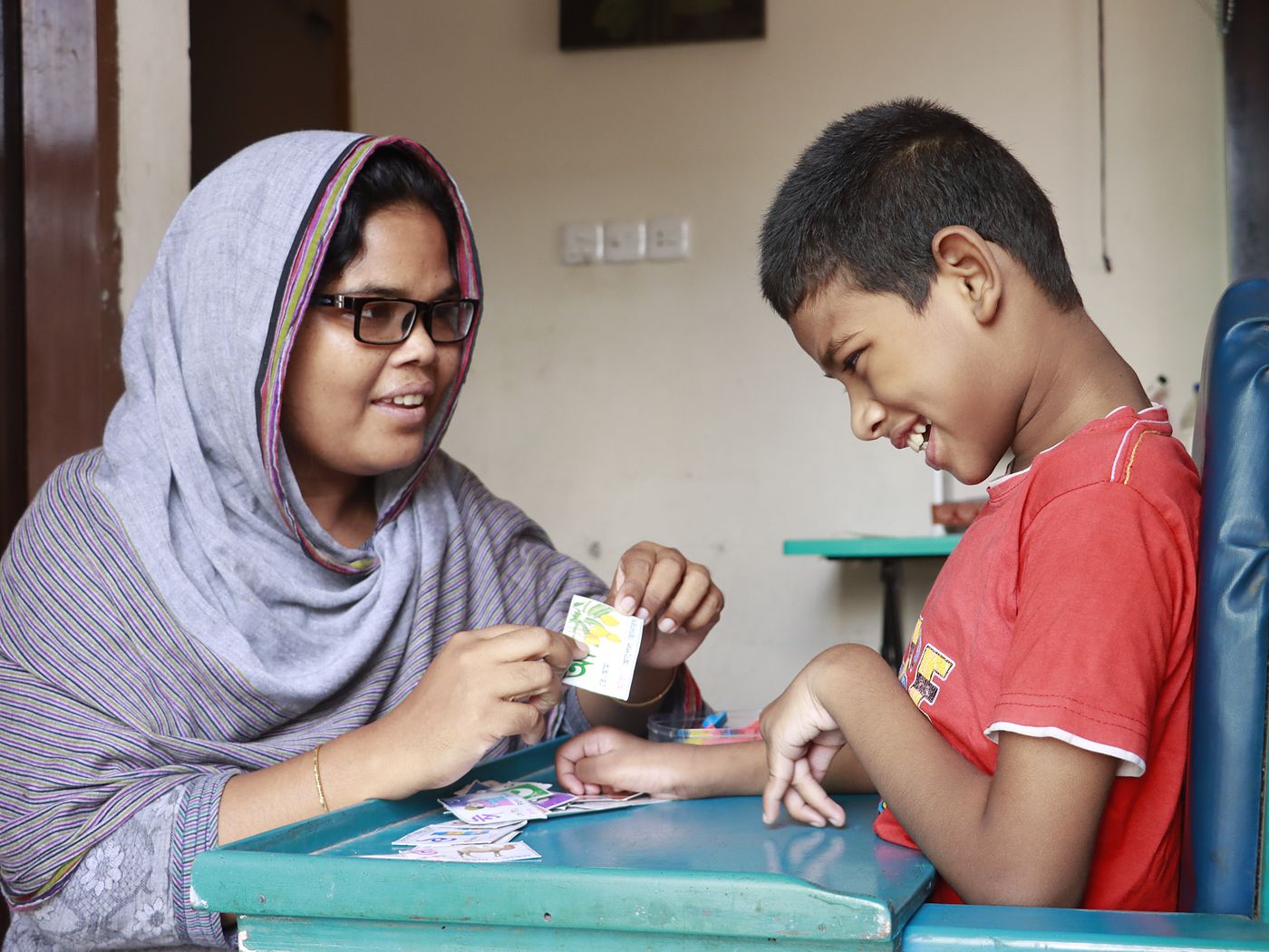
A therapist plays a picture-card game with a boy seated in an adapted therapy chair
127
Rehabilitation centres: 11 in government Upazila Health Complexes, 116 at community level
208,217
Persons with disabilities or at risk of disability supported directly
38
Districts and 54 upazilas
918
Government health facilities reached
Our approach

Strengthening the health system: inclusive and affordable

DRRA works with the Ministry of Health and Family Welfare (MoHFW) and its line departments, including the Directorate General of Health Services (DGHS), to make the health system inclusive and affordable for all.

As a result, Community Clinics, Union Health Centres, Upazila Health Complexes, District Hospitals and Medical College Hospitals have become proactive in prioritising persons with disabilities. Rehabilitation units operate inside these facilities with technical resources, and a functional referral system built into the health system links each level to the next.

4.4 million

people reached through a stronger referral system for primary health care and rehabilitation

  • MoHFW
  • DGHS
  • Organisations of persons with disabilities
  • Partner organisations
  • Jatiya Protibandhi Unnayan Foundation (JPUF)
The Inclusive Health Model

From the home to specialist care

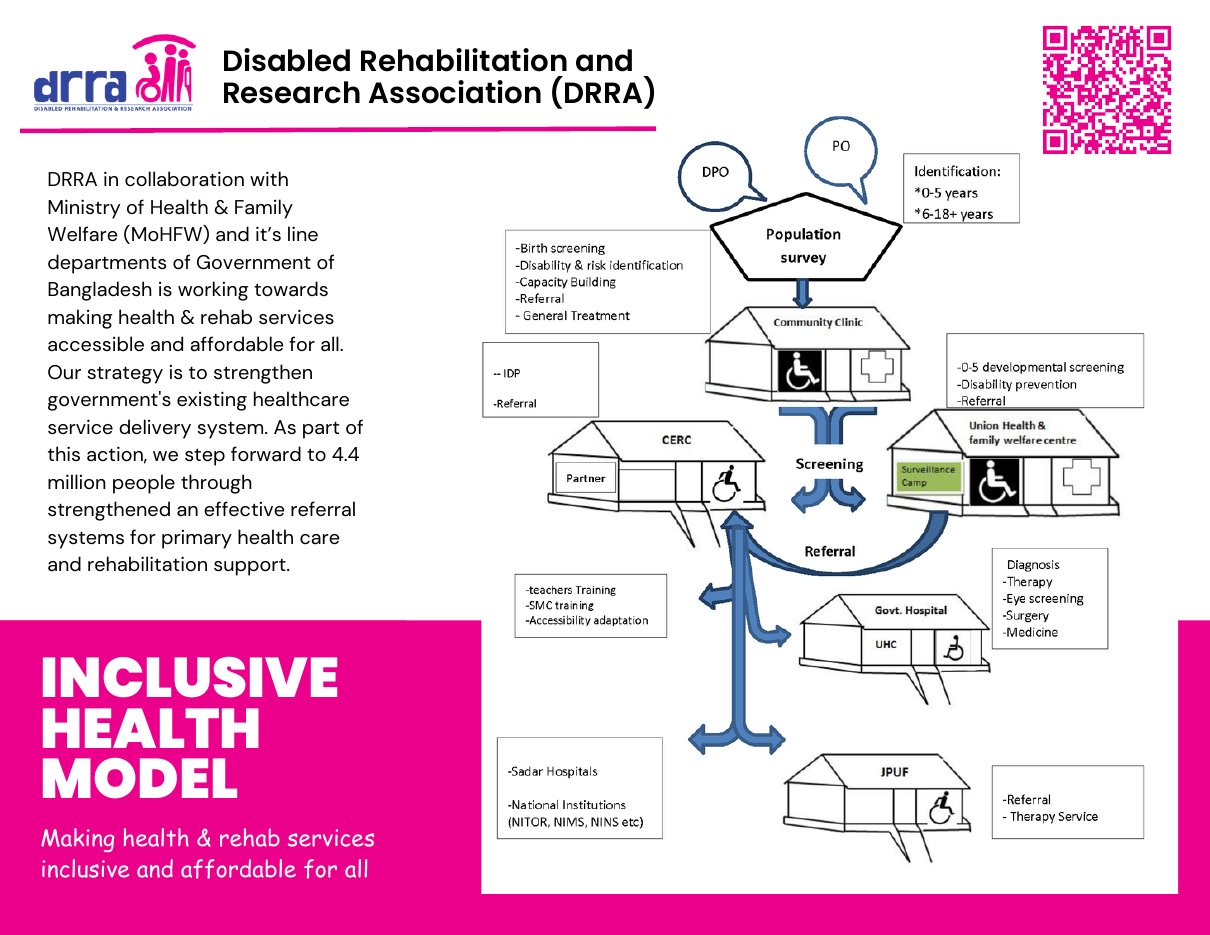
The model follows a person from the first household visit to the level of care they need. Each level screens, treats what it can and refers on, so no one has to find their own way to a distant hospital.

The Shivalaya Inclusive Health Model

This practice led to DRRA’s most significant achievement, the Shivalaya Inclusive Health Model: Bangladesh’s first comprehensive disability-inclusive public health model, recognised by the government. The model demonstrated how rehabilitation could be integrated into routine government healthcare by combining accessible infrastructure, rehabilitation corners, referral systems, telemedicine, community engagement and multidisciplinary service delivery. Its successful implementation provided convincing evidence that inclusive rehabilitation could become a sustainable component of the public health system.

Referral works in both directions: people move on for diagnosis and specialist care, and back to their community for therapy and follow-up.

  1. HouseholdEvery home in the area

    Population survey

    Organisations of persons with disabilities (OPDs) and partner organisations survey every household to find children and adults with disabilities or at risk of disability.

    • Children aged 0–5
    • Children, young people and adults aged 6–18 and over
  2. CommunityWard level

    Community Clinic

    The first point of contact with the health system, close to home.

    • Birth screening
    • Disability and risk identification
    • General treatment
    • Capacity building for clinic staff
    • Referral
  3. UnionScreening and prevention

    Union Health and Family Welfare Centre

    Checks young children’s development and works to prevent disability, with surveillance camps in the community.

    • Developmental screening, ages 0–5
    • Disability prevention
    • Surveillance camps
    • Referral
    Works alongside

    Community resource centre (CERC)

    Run with partner organisations. Plans each person’s support and links children to school. Inclusive education

    • Individual development plans
    • Referral
    • Teacher training
    • School Management Committee training
    • School accessibility
  4. UpazilaGovernment hospital

    Upazila Health Complex

    Where diagnosis is confirmed and treatment begins. Eleven DRRA rehabilitation centres operate inside Upazila Health Complexes.

    • Diagnosis
    • Therapy
    • Eye screening
    • Surgery
    • Medicine
  5. District and nationalSpecialist care

    District hospitals and national institutes

    District (Sadar) hospitals and national specialist institutes such as NITOR, NIMS and NINS, for people who need specialist treatment beyond the upazila.

    Works alongside

    Jatiya Protibandhi Unnayan Foundation (JPUF)

    The government’s national foundation for persons with disabilities, and its service centres.

    • Therapy services
    • Assistive devices
    • Referral
How the model works

Quality and inclusive health for all

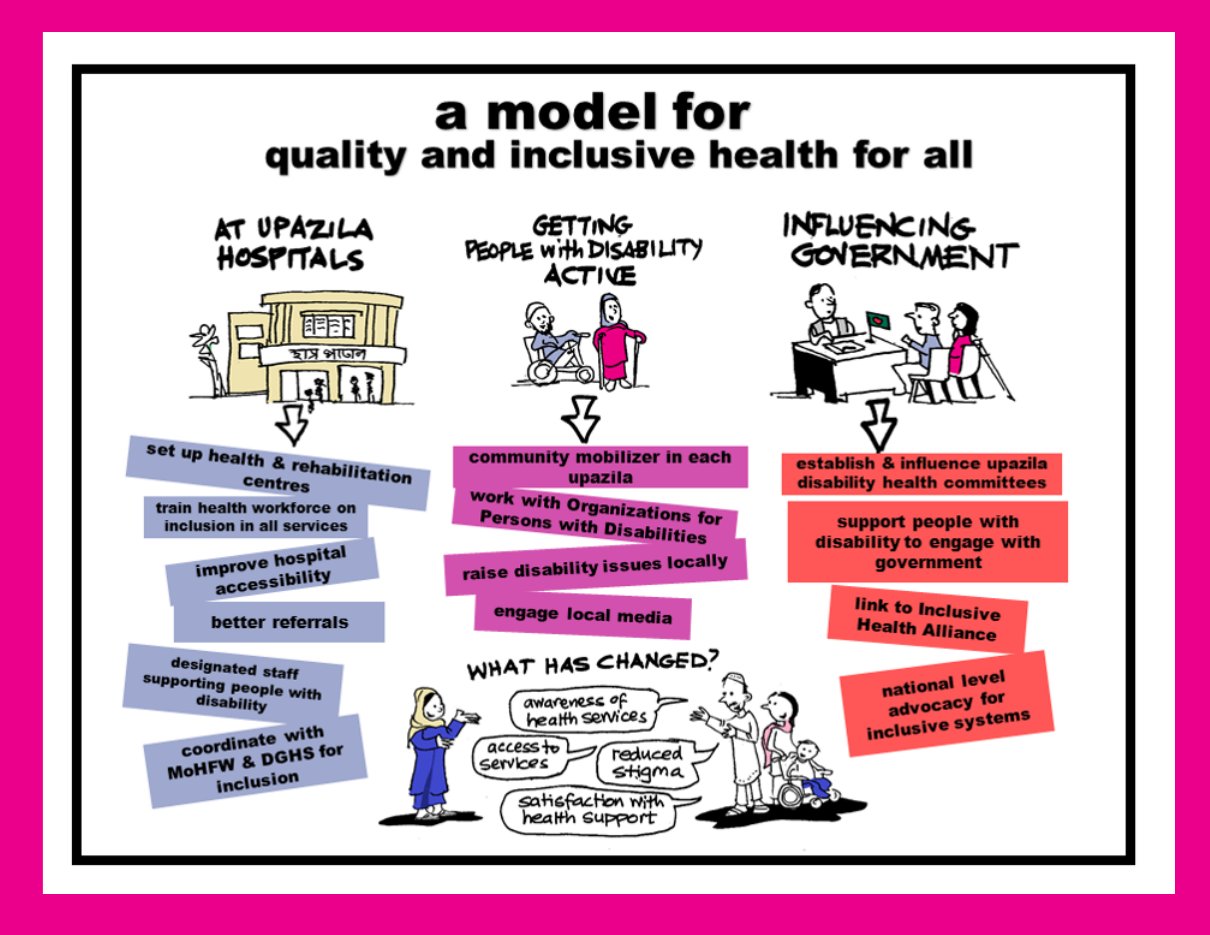
The model works in three places at once: inside upazila hospitals, among people with disabilities in their own communities, and with government at local and national level.

In upazila hospitals

Making hospitals inclusive

  • Set up rehabilitation centres inside hospitals
  • Train the health workforce to include people with disabilities in all services
  • Improve hospital accessibility
  • Better referrals between levels of care
  • Designated staff to support people with disabilities
  • Coordinate with MoHFW and DGHS so inclusion becomes standard practice
In the community

Getting people with disabilities active

  • A community mobiliser in each upazila
  • Work with organisations of persons with disabilities
  • Raise disability issues locally
  • Engage local media
With government

Influencing government

  • Establish and influence upazila disability health committees
  • Support people with disabilities to engage with government
  • Link to the Inclusive Health Alliance
  • National-level advocacy for inclusive health systems

What has changed

  • Greater awareness of health services
  • Better access to services
  • Reduced stigma
  • Greater satisfaction with health support

The Inclusive Health Model infographic

Making health and rehabilitation services inclusive and affordable for all. Both diagrams on this page are also available as a two-page infographic to print or share.

Download the infographic (PDF, 600 KB)
  • Infographic page 1: the Inclusive Health Model referral diagram, from the population survey to the community clinic, union health and family welfare centre, community resource centre, Upazila Health Complex, district and national institutes, and JPUFPage 1: from the home to specialist care
  • Infographic page 2: a model for quality and inclusive health for all, with actions at upazila hospitals, in the community and with government, and what has changedPage 2: quality and inclusive health for all
A long-term milestone

National screening protocols, built with government

DRRA co-developed national disability screening and diagnosis protocols with the Directorate General of Health Services (DGHS). They were piloted through NCD corners at upazila and district hospitals, and professionals have been trained to use the protocol to diagnose disability and refer people to appropriate services.

Community health workers use the protocol to identify need early. Clinical staff at the nearest rehabilitation unit confirm the diagnosis and a care plan, and therapy and assistive devices are provided at or near the person’s home.

This is not a single project but an institutional journey: built over many years with government, bilateral development partners, knowledge partners and the communities where screening happens, and renewed across many grant cycles.
  • ToolsStandardised screening and assessment tools, developed and refined over years of field use.
  • SystemsProtocols built into government health infrastructure, not run in parallel to it.
  • PolicyField-tested approaches feeding into national disability screening policy discussions.
  • PeopleHealth workers, designated hospital staff and community mobilisers trained to include people with disabilities.
In the field

What this programme looks like, in practice

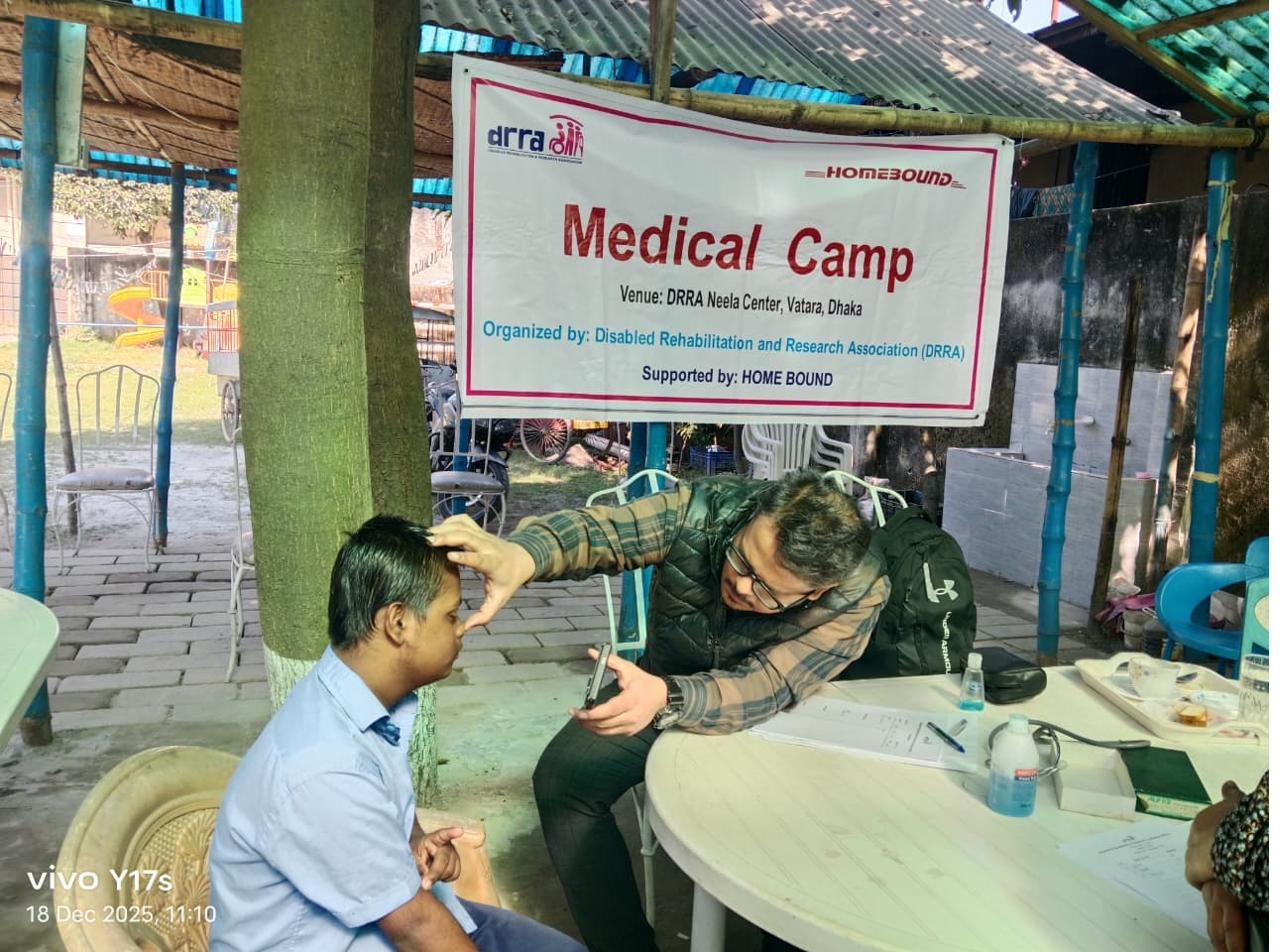
A doctor examines a patient at a DRRA medical camp
Screening at a DRRA medical camp
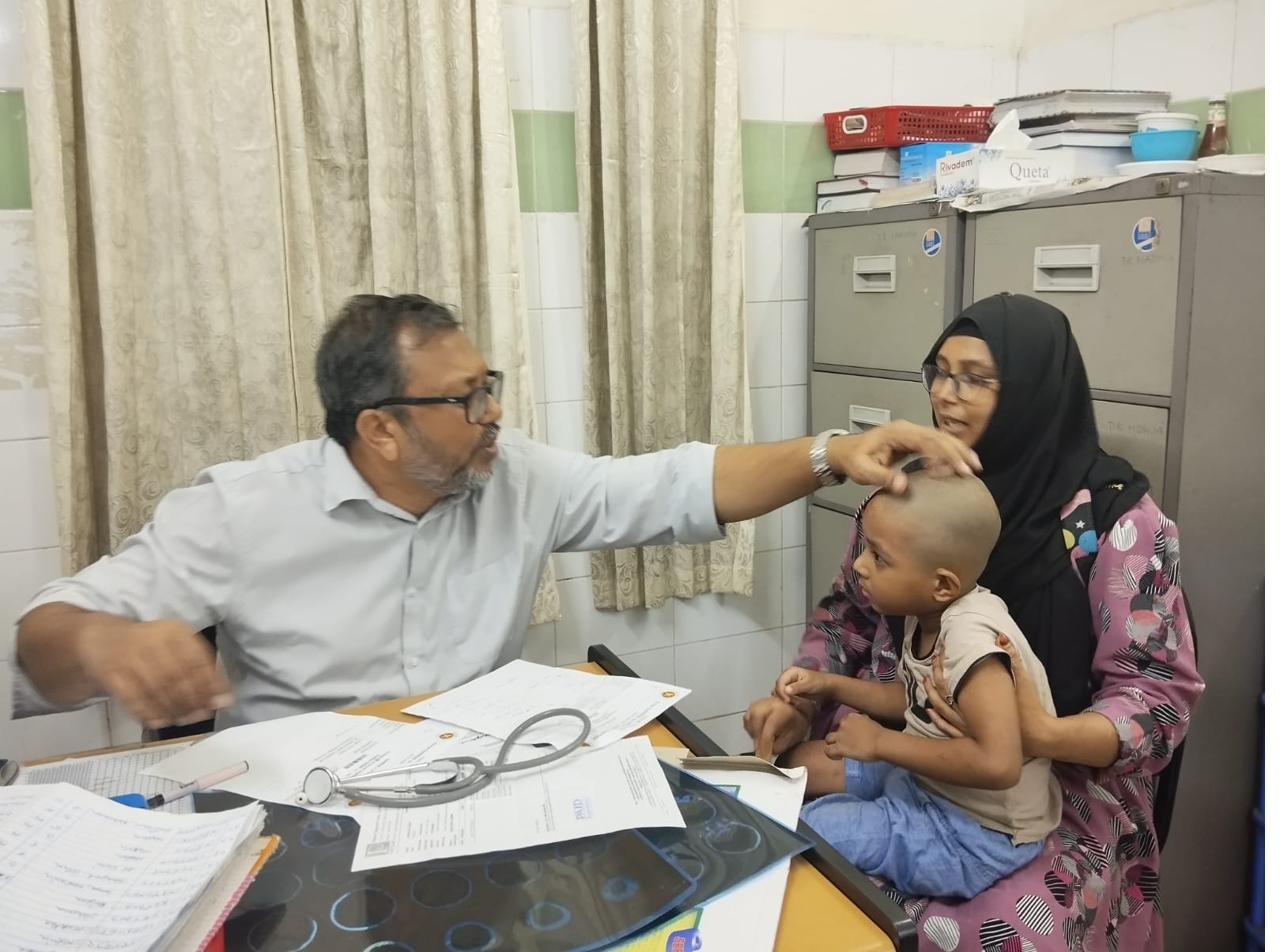
A doctor examines a young child on his mother’s lap during a referral visit
Clinical referral with a family
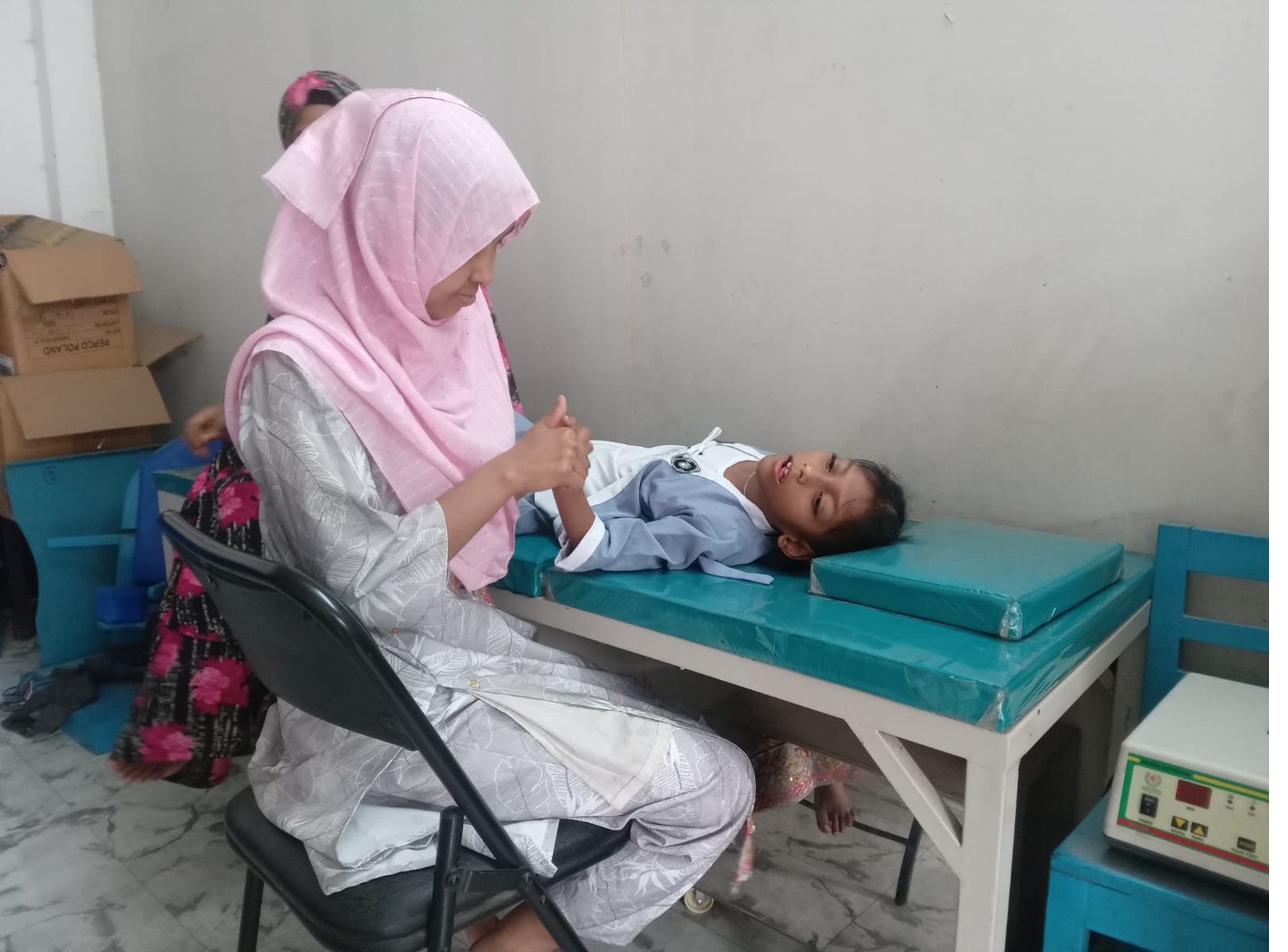
A therapist works on hand exercises with a child lying on a therapy bed
Hand therapy at a rehabilitation unit
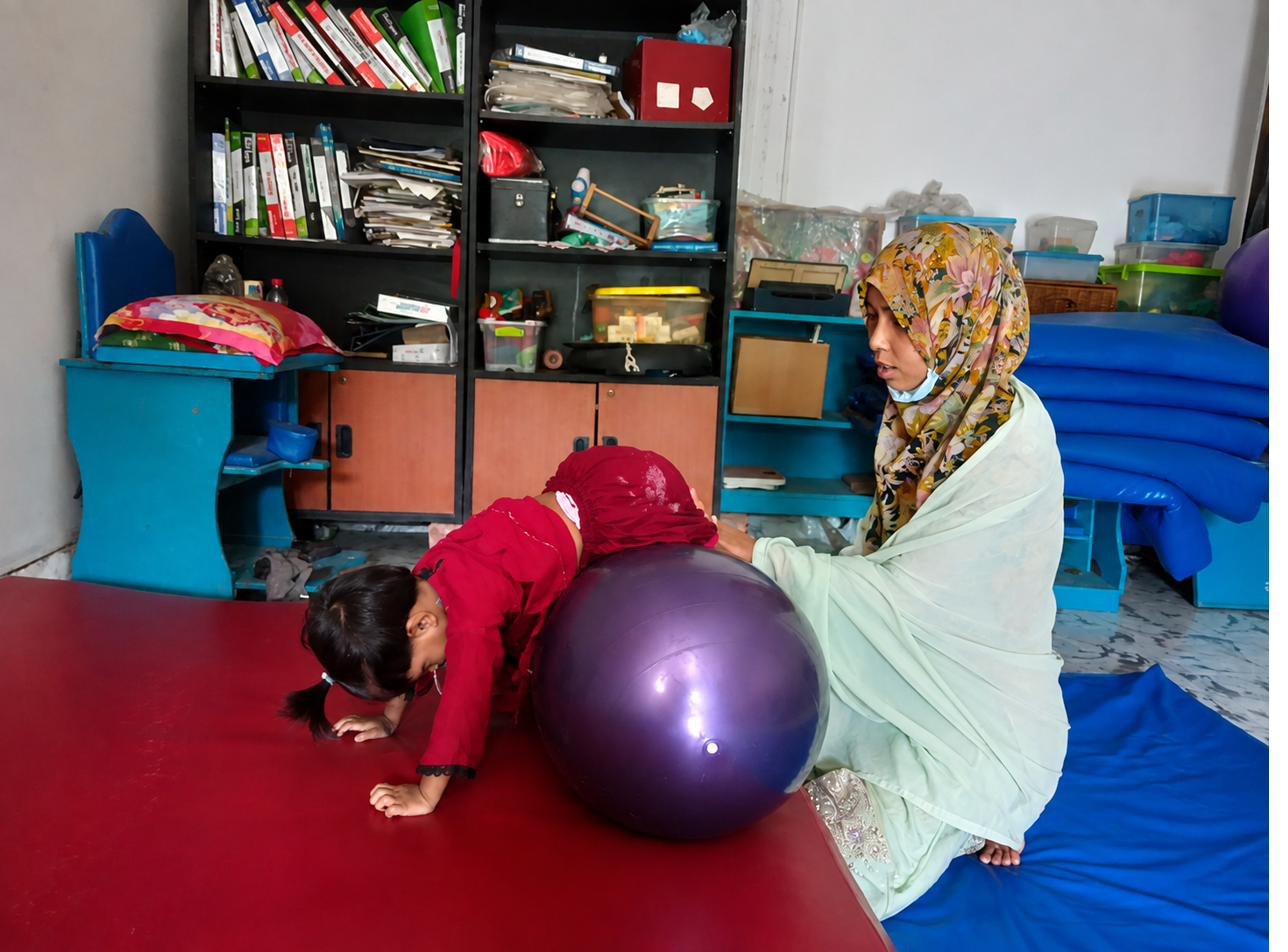
A physiotherapist supports a child on a therapy ball
Balance work with a therapy ball
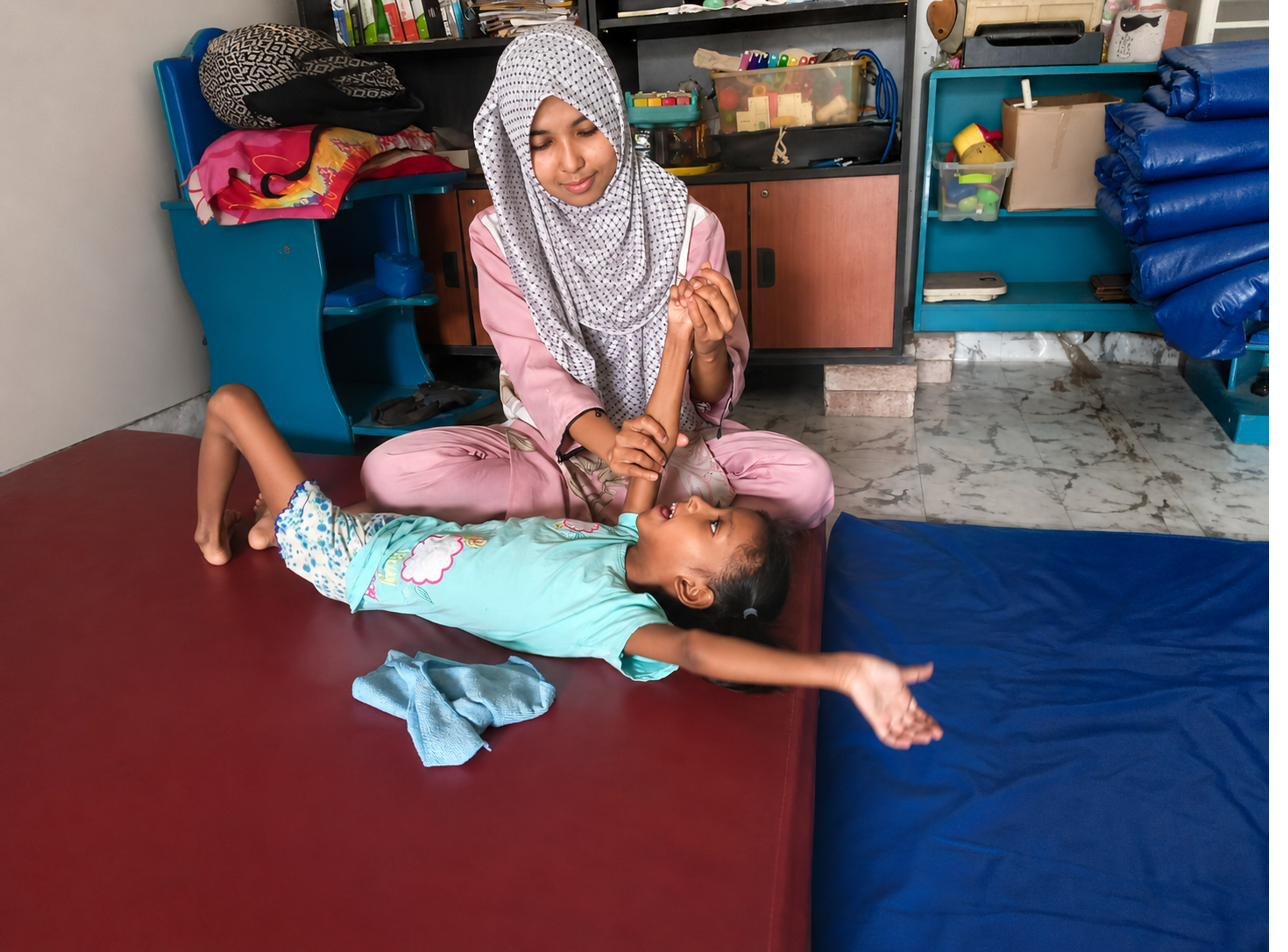
A therapist guides a child through a stretching exercise on a mat
Physiotherapy on the mat
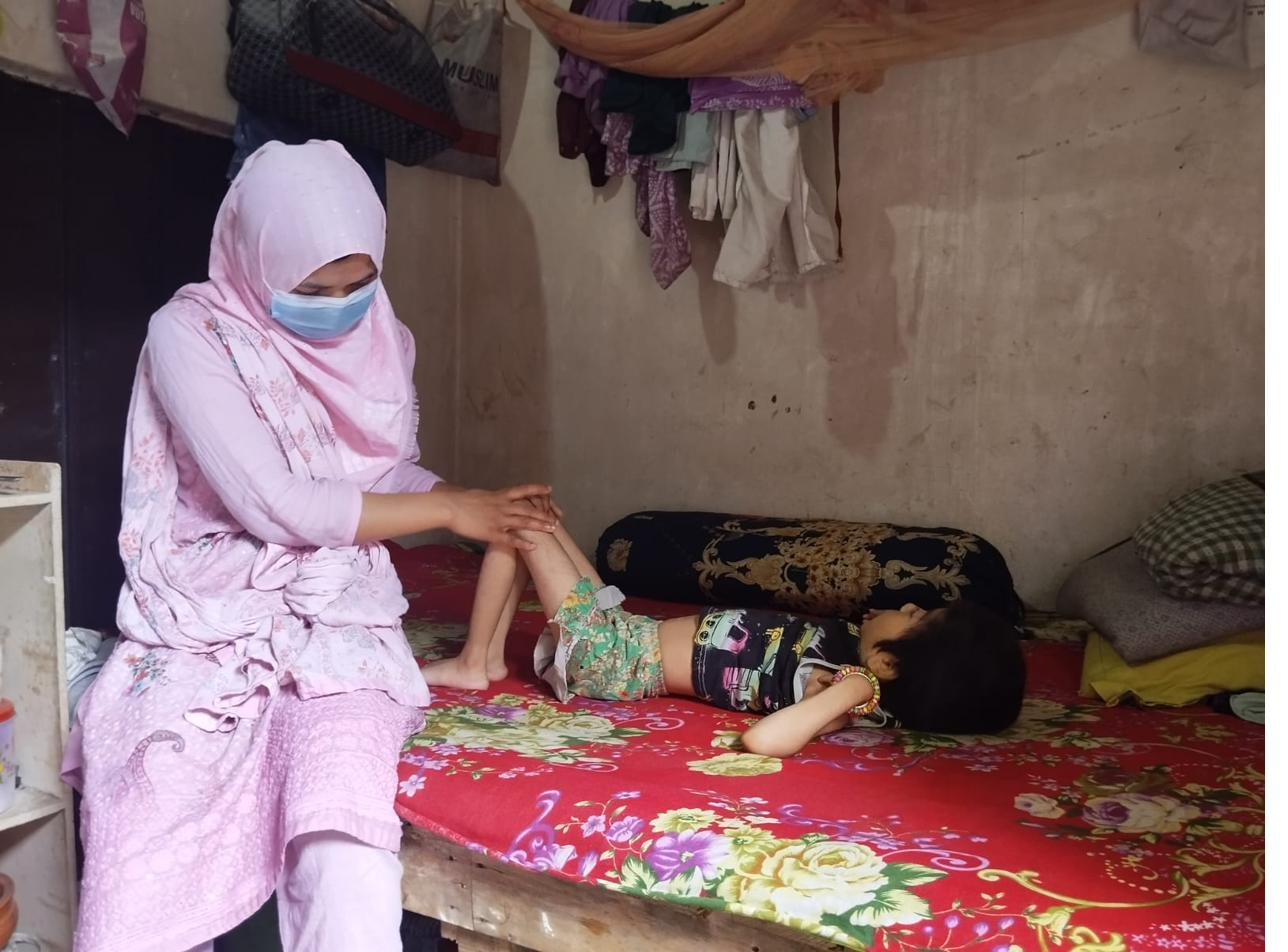
A therapist works with a child on a bed during a home visit
Home-based therapy session
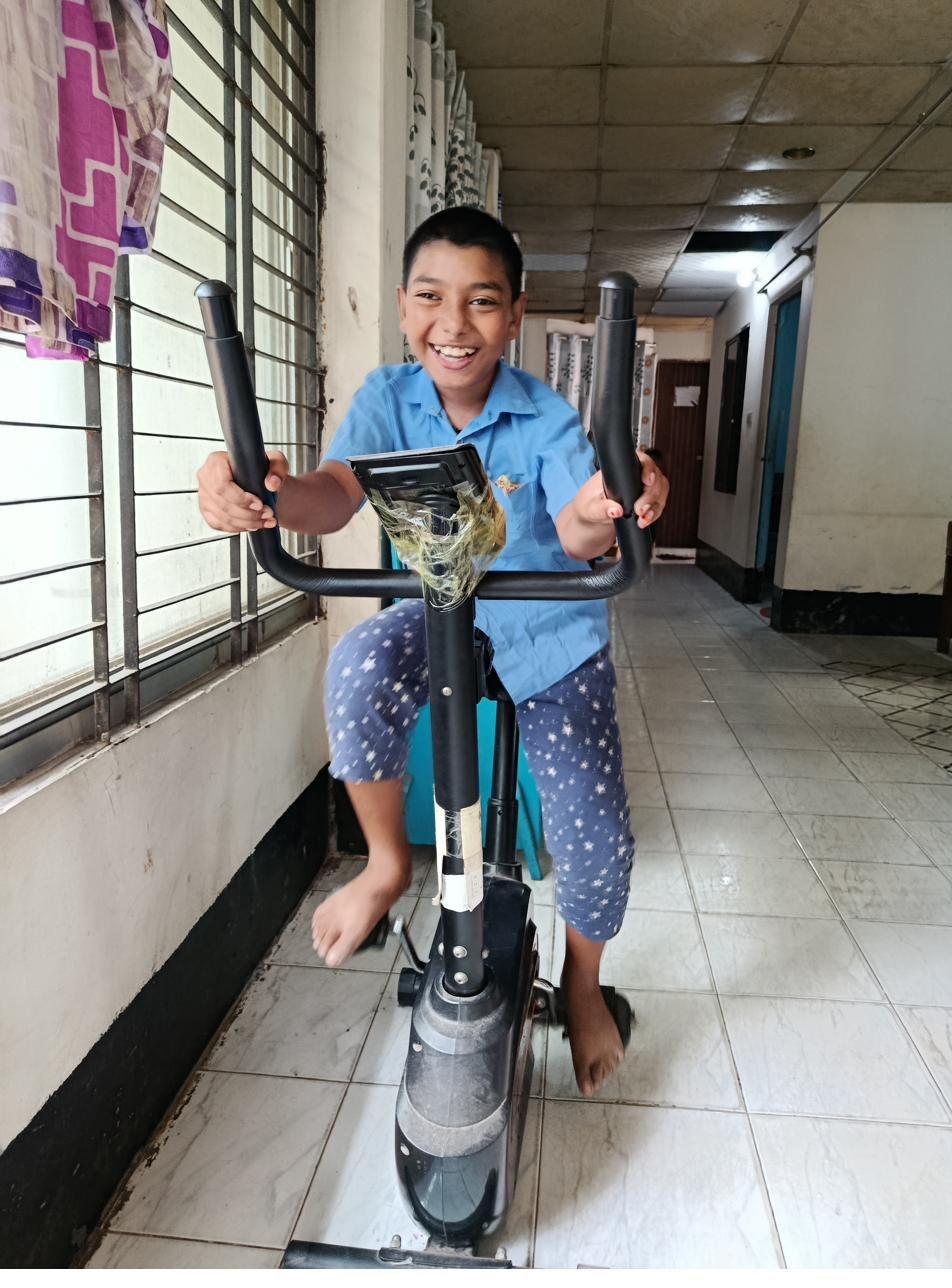
A boy smiles while pedalling an exercise bike in a therapy corridor
Strength-building on an exercise bike
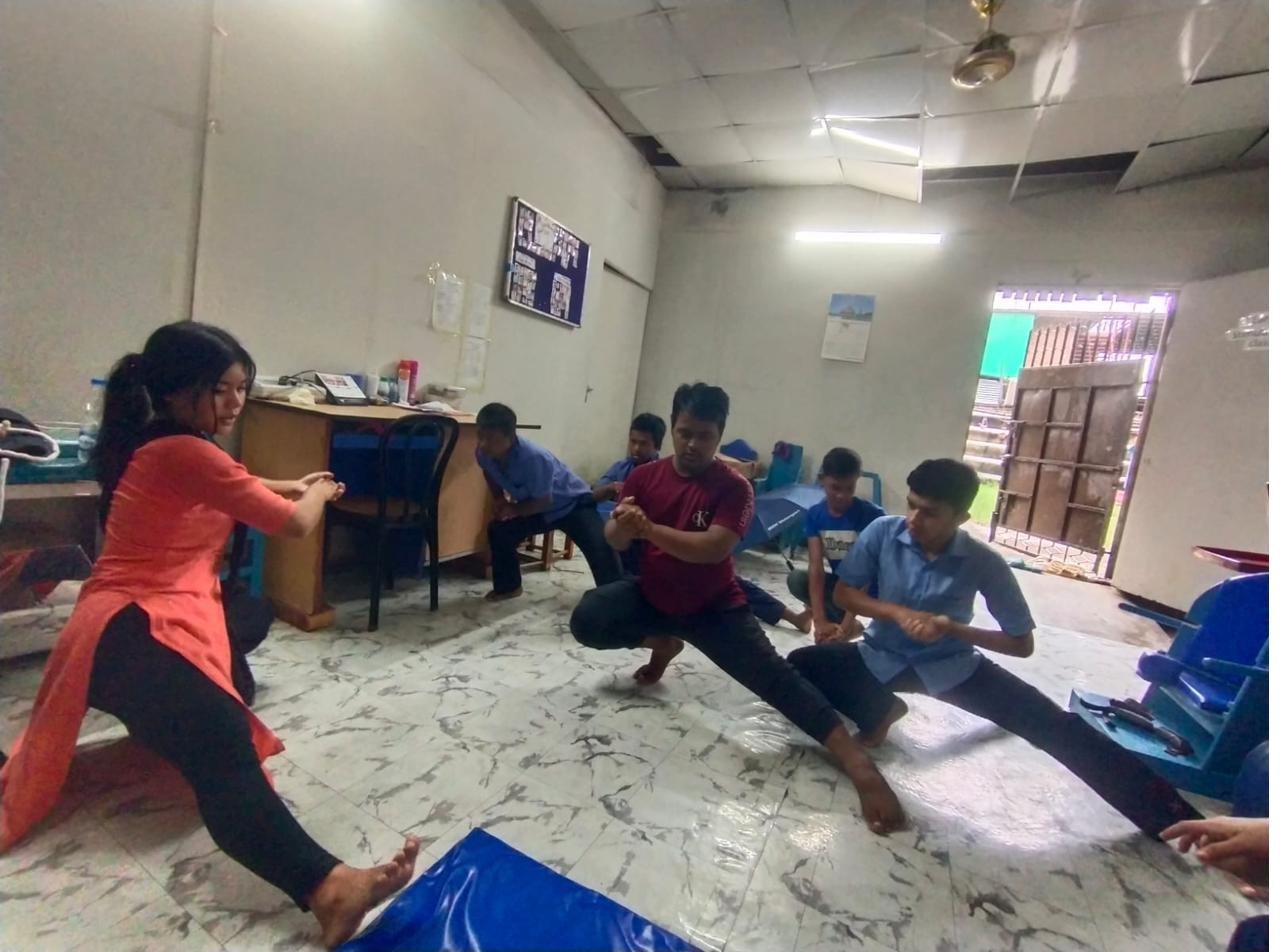
Children and adults stretch together in a group physiotherapy session
Group physiotherapy session
Where funding goes

What a gift to this programme can support

Indicative amounts. DRRA confirms current costs when a gift is designated.

$45
One physiotherapy course for a child
$180
A basic mobility wheelchair
$600
Training for one community health worker
$2,500
One month of a rehabilitation unit’s running costs